
27th July 2025 – Grenada
A small flashback to fixing the coolant tanks… what a mission!
After a week of sticky heat, crawling bilges, and battling mildew, it was time to address the coolant leak. This was kind of a major deal… because its a keel-cooled engine – we absolutely need coolant to run; and LOTS of it.

During the hull repairs, a small bit of damage was done to the coolant tank causing it to leak out. Unfortunately, the damage point was about half way up the coolant tank. To repair it properly it needed to be emptied so the hole could be patched over properly.
Option 1 – drain the coolant, repair, then refill with new coolant -> not possible as there would not be enough coolant on the island available to purchase to refill the tank!
Option 2 – pump out just a small amount of coolant to below the leak point, repair, then refill with the old coolant and top up as required.
200 Liters!
Using a transfer pump from the workshop, a full 44-Gallon Drum (or 200 Liters!) of coolant was removed. This dropped the coolant level below the leak point so the weld could be done safely.
A welder came by in the afternoon and cut out a damaged section of tank; welded in a new section.

The new section was welded in cleanly, and with the leak gone, we were ready to refill the system on Saturday.

Being a boat job, of course there is always an unexpected side effect…. unfortunately the heat of the weld transferred to some heat patches on the outside of the hull… ah well.. add repaint these patches to the list!


The 200-Litre Gamble
We hooked up the now-beloved 12V transfer pump to the coolant drum and started refilling the tank. About a minute through the process, the flow suddenly stopped—and then erupted out of the fill point. Coolant geysered out everywhere. Definitely a moment of excitement and confusion.
Ryan remembered (on the second try) there’s a bleed valve at the top of the tank that needs to be open while filling. Once that was cracked open, a hiss of air rushed out, and the coolant began flowing again like it was supposed to. Lesson learned!
✅ Tip: If you ever fill an old engine with coolant, open all the bleed valves. Otherwise, you’re just pressurizing an expensive mess.

Basic Math
After pumping back in all 200 liters of the coolant, we realized… we didn’t have enough. We had lost too much through the leak over the previous couple of days.
So, naturally, we did what anyone would do: pulled out a dipstick, eyeballed the depth of the tank, guessed the width and length, and made up some volume calculations based on a shape we hoped was a rectangle. Then we rounded up, ignored that it might actually be a triangle, and sprinted off to buy more coolant.
Racing the Island Clock
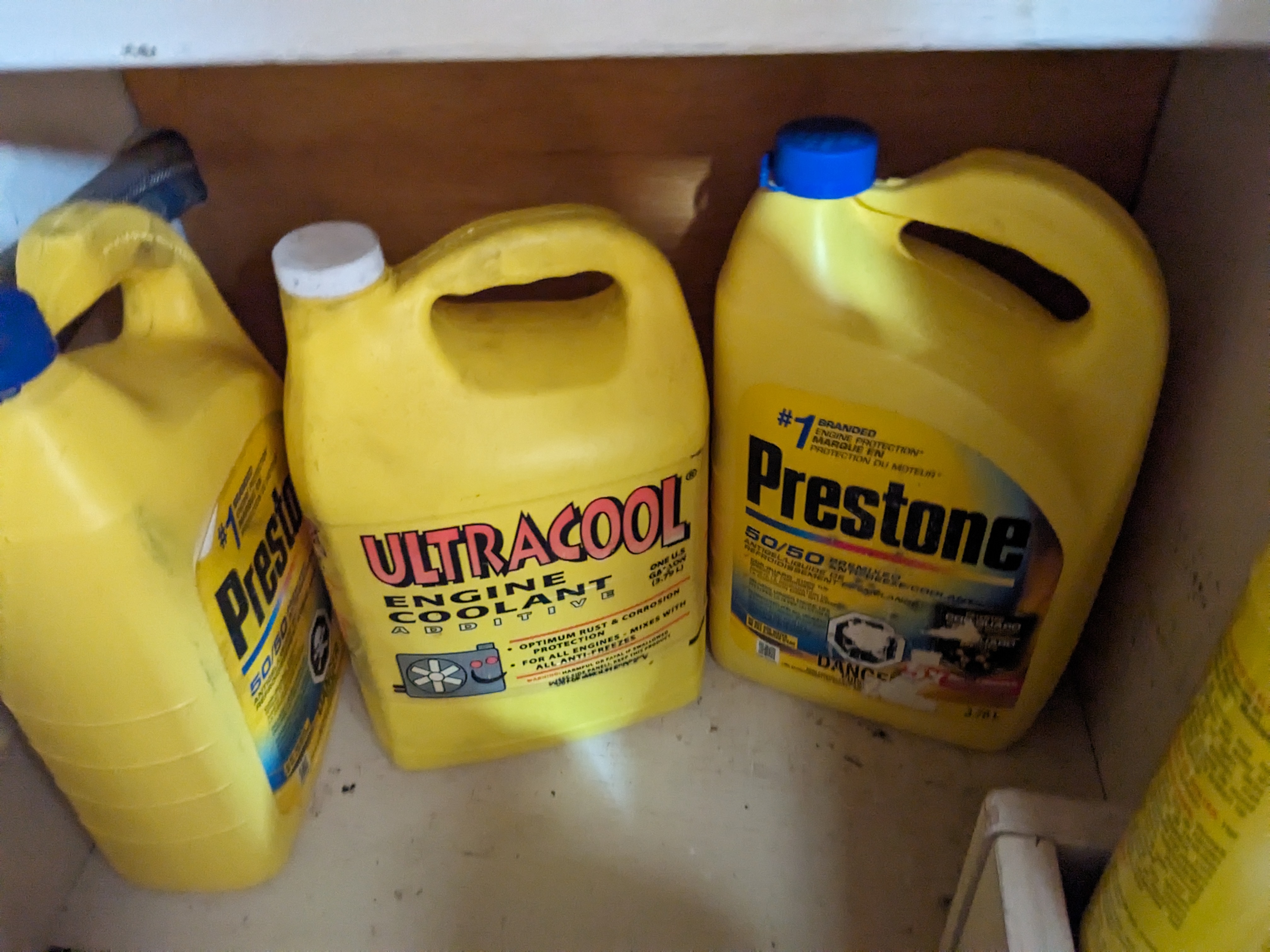
Grenada essentially closes at 2 PM on Saturdays, nothing is open on Sundays and we were launching Monday 😬 and it was already 12:30. We drove like maniacs into town, hit the hardware store just in time, and bought 12 gallons of 50/50 premix coolant. That was their entire stock!!! —and, it turns out, exactly what we needed.
Fun twist: we almost bought additive instead of coolant, but a friendly staff member pointed out that we would’ve diluted our system into uselessness. Thank you to Mr. Hardware Store Guy for saving our engine (and our dignity).


Final Refill & Coolant Count
Back at the yard, we opened the bleed valve first this time and slowly filled the entire system. We watched carefully for leaks, closed everything off at the right moments, and finally topped off with the last bottle of additive we’d had lying around.
Known coolant onboard: 200 Liters + 12 x 3.785L + 1x 3.785L = 249.2 Litres. We also have no idea how big the tank is, and it was definitely not more than half empty! A little concerning to think how much coolant is onboard this boat!
We’ll probably buy a couple more bottles as backup for when the engine runs and inevitably burps out an air bubble somewhere. But for now, the cooling system is full, the leaks seem sealed, and the engine is ready to fire up.
Bonus to end the day: Engine Startup Without a Flood
The next day, we reconnected everything, crossed fingers, and turned the key. The engine roared to life—and, miracle of miracles, no coolant sprayed everywhere.
One tiny drip from a sensor port was resolved with a quick tighten. All gauges worked, except the temperature gauge (naturally), but that’s another story.
Coolant Saga TL;DR:
- Friday: Pumped out 200L coolant and welded keel cooler leak
- Saturday: Refilled system with 50L (13 gallons) of new coolant
- Used: Battery-powered pump, 12V transfer pump, basic volume math
- Key lesson: Always open bleed valves (then close again later)
- Crisis averted: Didn’t ruin engine with too high concentration of coolant additive
- Sunday: Engine started beautifully, coolant stayed where it belonged


(waiting for coolant)

You must be logged in to post a comment.